Business Waste Removal in Bayswater
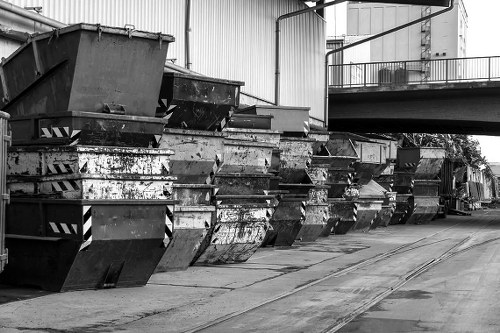
Business waste removal in Bayswater needs a service that is organised, discreet and clear about what can be taken away. We remove everyday commercial waste from offices, shops, hospitality premises and mixed-use workplaces, helping you keep routine clear without building up unwanted materials on site. The emphasis is on practical clearance, sensible segregation and a straightforward handover, so the work fits around normal trading rather than interrupting it.
Our business waste removal service covers a wide range of non-hazardous materials that commonly arise in commercial settings, including office furniture, packaging, general rubbish, fixtures, filing, broken equipment and surplus items from refits or relocations. We can also support businesses that need regular or one-off clearances where waste needs to be removed carefully from shared buildings, back-of-house areas or storage spaces. Clear scope matters, because different materials need different handling and not every load is suitable for the same route.
If you need a quotation, start with the type of waste and the access details, then send the information through in one go. That helps us give a more accurate response and reduces back-and-forth. You can also ask about the most suitable way to arrange the clearance if you are dealing with a tight window, a building with shared access or a workplace that must stay open while the work is done.
Commercial waste clearances for day-to-day operations
Businesses often need waste removed at the end of a project, after an office tidy-up or when stockrooms begin to fill with items that no longer serve a purpose. Our clearances are planned around the practical mix of material on site rather than forcing everything into one broad category. That means we can deal with ordinary office waste, redundant shelving, mixed light commercial rubbish and bulky items that are awkward to move through working premises.
Where a business has a pattern of recurring waste, the main decision is usually how much material builds up between clearances and how accessible the waste is when the team arrives. The better the information, the easier it is to plan the load. If you already know which rooms, floors or storage points are involved, include that in your enquiry. You can request a quotation by describing the waste in plain language, then choose the date and approach that suits the site.
Office, retail and hospitality waste
Office clearances may include desks, chairs, storage units, monitors, cables, archived paperwork and the general clutter that accumulates during reorganisations. Retail and hospitality sites sometimes need unwanted display units, packaging, broken fixtures or end-of-line stock removed, and the work may need to be timed around deliveries, opening hours or building access. We keep the process focused on what is being removed, what stays in place and how the waste can be taken out safely.
Items commonly handled in a business clearance

Business waste removal is often more varied than a household clearance because commercial premises tend to collect a wider range of materials. We can usually help with general rubbish, office furniture, shelving, shop fittings, card and packaging, broken equipment, small electrical items and mixed items from storerooms or refurbishment work. If you have material that sits outside the ordinary mix, it is best to identify it early so the load can be assessed properly.
Some businesses prefer to clear a whole area in one visit; others want a smaller removal from a single room, cupboard, mezzanine or storage bay. Both approaches can work well when the scope is clear. A useful rule is to note any heavy items, awkward access, lift restrictions or shared corridors before asking for a price. That allows the quotation to reflect the work realistically instead of relying on guesswork. Our pricing and quotes information can help you understand the kind of details that are usually needed.
For a quick decision, it helps to sort your list into three groups: what is going, what stays, and what may need extra handling. That simple split saves time during the booking stage and reduces the chance of missed items. If you are unsure whether a particular object belongs in the load, mention it rather than leaving it out. We can then review the list and suggest the most suitable route.
Access, timing and site coordination
Commercial clearances work best when access is considered at the same time as the waste itself. A business may be on a main road, inside a shared building, above another unit or split across several rooms, and each of those layouts affects how the removal is carried out. If there are loading restrictions, permit needs or particular entry points, include those details early so the clearance can be planned around them.
Many customers also need the work arranged so it fits with staff movement, deliveries or customer traffic. That is especially relevant when waste is located in a back office, stockroom or upper floor and must travel through active parts of the premises. We aim to keep the practical steps clear: identify the items, confirm the access, agree the collection plan and then remove the waste with as little disruption as the site allows. If you are ready to compare options, booking online is available for straightforward enquiries.
When preparing an enquiry, it is useful to have photographs, approximate volumes and any details about stairs, lifts or restricted parking in one place. You do not need to overcomplicate it; the aim is simply to make sure the quotation is based on the real job. If the load contains different material types, list them separately so the work can be handled more accurately and any special considerations can be identified before the visit.
Office furniture and equipment clearance
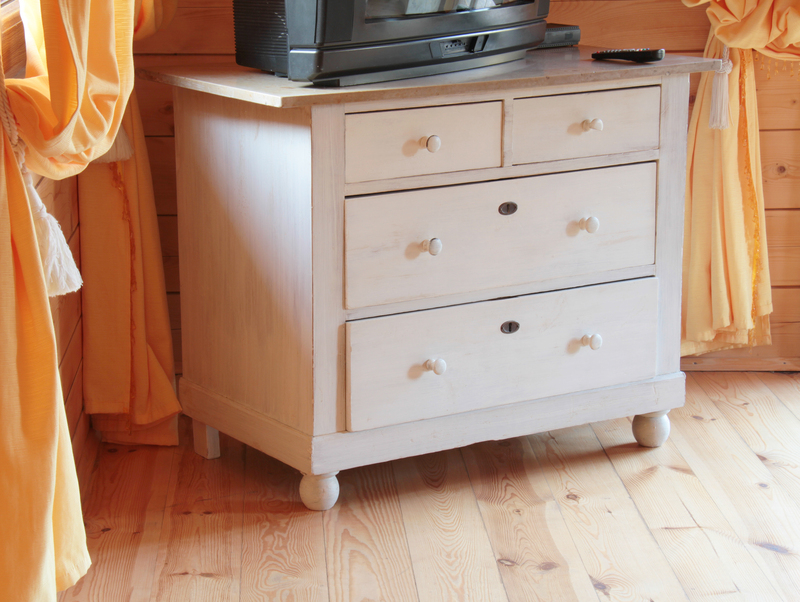
Office furniture removal is often the largest part of a commercial clearance, especially where workstations, meeting rooms or storage areas are being reorganised. Desks, chairs, cupboards, filing cabinets and similar items can take up more room than expected, so breaking the job into clear categories helps. We can remove single items or larger grouped clearances depending on what the site needs.
Equipment also needs careful assessment because not every device should be treated as ordinary rubbish. Screens, printers, computers, small electrical items and related office equipment may require separate handling from general waste, and the safe removal process should reflect that. It is sensible to distinguish between reusable furniture, broken office items and anything that must not be mixed with normal rubbish. Our office clearance service gives a focused option when the main task is to empty or reorganise work areas.
If your workplace is changing use, replacing furniture or clearing a room for contractors, the best result usually comes from a simple plan: identify the rooms, list the items and check whether anything has to remain on site. That makes it easier to schedule the removal in the right order, especially where furniture is bulky or needs to move through shared access routes. A clear plan also reduces the chance of delays on the day.
About Bayswater
Bayswater is an inner London district in the City of Westminster, positioned between Kensington Gardens to the south and the railway and residential corridors that lead north towards Paddington. Its streets are notable for long terraces, mansion blocks and a dense urban grain that reflects nineteenth-century expansion around central London. The area’s character is strongly shaped by its proximity to Hyde Park and Kensington Gardens, with much of the local street pattern organised around squares, crescents and busy east-west routes rather than wide open avenues. Queensway and Westbourne Grove are among the best-known shopping streets nearby, while Notting Hill lies immediately to the west and Paddington to the north-east, placing Bayswater within a well-connected part of the capital. The district has a cosmopolitan feel that developed over time through housing, hotels and later commercial activity, and many buildings now serve a mix of residential and business uses. The architecture includes stucco-fronted terraces, converted townhouses and later apartment buildings, with several streets showing the scale and ambition associated with London’s Victorian and Edwardian growth. Bayswater Underground station and nearby Queensway station provide direct links into the wider city, reinforcing the area’s role as a busy residential and visitor location. Green space is a major feature of the locality because the southern edge opens towards Kensington Gardens and, beyond that, Hyde Park, giving the district an unusually immediate relationship with one of London’s largest royal parks. That combination of dense urban streets, historic housing and strong transport connections gives Bayswater a layered identity that remains closely tied to central London while retaining its own distinct street life.
Waste handling, sorting and responsible disposal
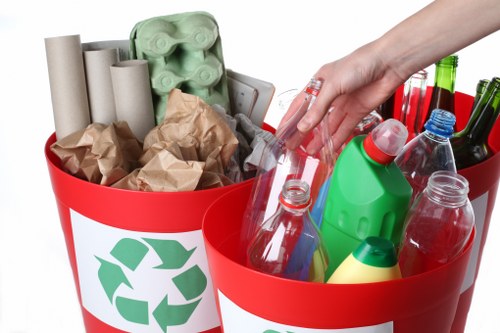
Commercial waste is easier to manage when it is sorted with a little thought before removal. Grouping items by type makes it simpler to lift, load and process the waste in a sensible order, and it can also help when some materials are more awkward than others. General rubbish, furniture, equipment, cardboard and mixed office waste may all be part of the same clearance, but they do not always travel best as one unstructured pile. A tidy separation at the outset often leads to a neater job overall.
Responsible handling also matters when a business wants to maintain order after the clearance is complete. If the site still contains items to be reused or passed on internally, separating those from the waste avoids confusion. We can work from a defined list, a room-by-room sweep or a broader collection plan depending on the premises. If you are collecting quotes from different providers, ask each one to explain what is included so you can compare like with like rather than just looking at a headline figure.
For businesses that clear material in stages, it can be helpful to keep one reference list for each room or storage point. That way, nothing useful is removed by mistake and the waste can be dealt with in a more controlled sequence. Small organisational steps at the beginning often make the removal smoother, especially in premises that contain both public-facing and back-of-house areas.
Builders’ and fit-out waste from commercial premises
Fit-outs, refurbishments and smaller building projects often generate mixed waste that is different from ordinary office rubbish. Materials such as offcuts, packaging, broken fixtures, old fittings and stripped-out items may need to be removed once a space has been updated or prepared for the next phase of work. We can assist with these commercial clearances when the focus is on taking away the unwanted material left behind by light works or interior changes.
These jobs benefit from a careful look at access, because trade waste can be heavier, dustier or more awkward to move than typical day-to-day rubbish. It is useful to note whether the waste is concentrated in one room, spread across several floors or stored outside ready for collection. If the premises are still active during the work, clear instructions help keep the clearance orderly. You can also review builders’ waste clearance if your main requirement is waste from construction or refurbishment activity.
Where a project is unfinished, the right approach is usually to remove only what has been agreed and leave the space ready for the next stage. That means identifying the material to be collected, the route out of the building and any items that must be protected or left in place. The clearer the scope, the easier it is to coordinate the removal around the wider project timetable.
Premises, rooms and storage areas
Not every commercial clearance is a complete strip-out. Sometimes the need is much more specific: a storage room has filled up, a back office has become crowded, or a small part of a larger unit needs to be emptied before a change in use. In those cases, the main task is to remove only the unwanted material while keeping the rest of the site undisturbed. That can be just as important as a full clear-out.
We can work from a defined area within the premises, which is useful when business owners want to retain control over what stays and what goes. If you already know the exact rooms or zones involved, include them in the request so the quotation matches the actual scope. For larger premises, it often helps to mark the items or spaces beforehand. That avoids confusion and keeps the clearance moving in the right direction from the start. Business waste removal information elsewhere on the site may also help you compare the main options available.
In practical terms, the best clearances are usually the ones where the customer has had a quick look through the site and identified the items that are definitely leaving. That makes the process more efficient and leaves less room for uncertainty. If you are not yet sure how much needs to go, a rough list is still useful and can be refined once the details are clear.
Get a quotation for business waste removal in Bayswater
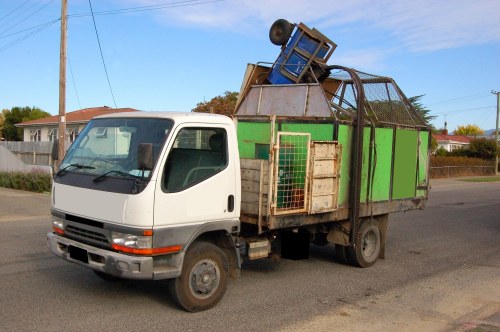
If you need business waste removal in Bayswater, the simplest next step is to describe the waste, the access and the type of premises so the job can be assessed properly. We handle commercial clearances with a practical focus on what is being removed, where it is located and how the site should be left afterwards. That approach helps keep the service organised whether the work is a one-off tidy-up or part of a wider business change.
You can use the contact details or quotation page on the site to send your request once you are ready. A clear list of items, a few notes on access and an idea of the preferred timescale are usually enough to begin. If your premises include mixed materials or awkward items, mention those too so the quotation reflects the full scope. Contact us for a quotation when you are ready to arrange the next step.
For a straightforward enquiry, the most helpful thing is a simple description written once: what needs removing, where it is, and whether there are any access points we should know about. That keeps the process efficient and gives you a more useful reply. If you are planning ahead, send the details now and ask for the quotation that best fits your commercial clearance.